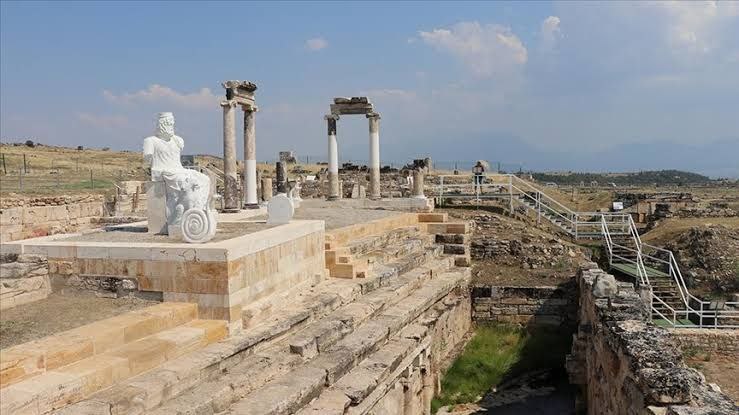
Restoration of Ancient Roman Tombs in the Hierapolis Area, Pamukkale, Turkey
Restoration of Ancient Roman Tombs in the Hierapolis Area, Pamukkale, Turkey
Introduction
Hierapolis is one of the most important ancient Roman cities in Asia Minor, located near Pamukkale in modern-day Turkey. The city, which is listed as a UNESCO World Heritage Site, is known for its hot springs and unique architecture. One of the most important parts of this ancient city is the vast and valuable necropolis, which includes tombs from various periods, from the Hellenistic period to the Roman Empire.
Due to the effects of time, climatic conditions and human factors, this cemetery has been severely damaged. In recent years, several projects have been implemented to restore and protect these tombs in order to preserve the historical and cultural value of the site for future generations. This article examines the restoration process, challenges and techniques used in the reconstruction of the ancient tombs of Hierapolis.
History and Archaeological Significance of the Tombs of Hierapolis
Hierapolis was founded in the 2nd century BC by the kings of Pergamon and reached its peak during the Roman Empire. The necropolis is one of the largest and most important burial areas in the ancient world. The area contains a variety of tombs, including rock tombs, family crypts, burial vaults, and burial platforms, reflecting cultural diversity and burial practices from different periods.
Challenges in Restoring Ancient Tombs
The restoration of ancient tombs faces several challenges, including:
Deterioration due to environmental conditions: Natural factors such as earthquakes, erosion, high humidity, and the effects of hot springs have caused the gradual erosion and degradation of the tomb stones.
Human Damage: Unauthorized excavations, tourism-related damage, and neglect have led to the destruction of the tombs.
Stone Decay and Destruction: Many of the stones used in the tombs of Hierapolis are made of limestone and marble, which are vulnerable to climate change and plant growth.
Documentation Challenges: Before any restoration, there is a need for detailed research, documentation, and 3D modeling of the burial structures in order to accurately conduct the restoration process.
Restoration and Conservation Methods
1. Survey and Documentation
Before the restoration process begins, experts use modern technologies such as photogrammetry, laser scanning, and 3D modeling to record and document the current condition of the tombs. This data helps to better understand the structural condition of the tombs and plan carefully for restoration.
2. Structural Stabilization and Reinforcement
Some tombs have extensive cracks and fractures. To prevent further destruction, the following methods are used:
Injection of special mortars and resistant compounds to fill gaps and stabilize structures.
Use of temporary scaffolding to support structures that are at risk of collapse.
3. Cleaning and protecting stones
One of the important stages of restoration is the removal of deposits and contamination on the surface of the tombs. This is done using non-invasive methods such as:
Using soft brushes and distilled water
Low-power lasers to clean deposits without damaging the surface of the stone.
4. Replacing worn out pieces
Stone pieces that are severely damaged and can no longer be restored are replaced with stones of the same type and with the same traditional techniques. This process requires careful studies of the original materials and techniques used in ancient times.
5. Environmental Impact Control
To reduce the negative impacts of environmental conditions, measures such as:
Establishing drainage systems to prevent rainwater from accumulating around tombs
Establishing temporary shelters to protect stones from direct sunlight and extreme temperature changes are taken.
Successful examples in the restoration of the Hierapolis cemetery
In recent years, numerous projects have been carried out to restore ancient tombs in Hierapolis. One of the successful examples is the restoration of the Tomb of Philadelphus, which was damaged by historical earthquakes. This tomb was restored to its original form after careful study and meticulous restoration.
In addition, international cooperation projects with European and Turkish universities have been able to accurately reconstruct burial structures with the help of modern techniques such as digital modeling and conservative excavations.
Conclusion
The restoration and conservation of the ancient tombs of Hierapolis is not only an important cultural measure to preserve the history and identity of this region, but also increases the attraction of tourists and the economic prosperity of the region. The use of modern documentation methods, materials compatible with ancient structures, and continuous monitoring of environmental conditions are among the most important measures to preserve these valuable works.
With continued research and implementation of conservation projects, it can be expected that the ancient tombs of Hierapolis will be preserved for future generations and continue to exist as one of the most important historical treasures of Rome in Asia Minor.
Author and translator: Professor Dr. Hesam Mohtasham
0 Comments:
replay to Comments
Write your answer, it will be displayed after the administrator's approval
Leave a Reply