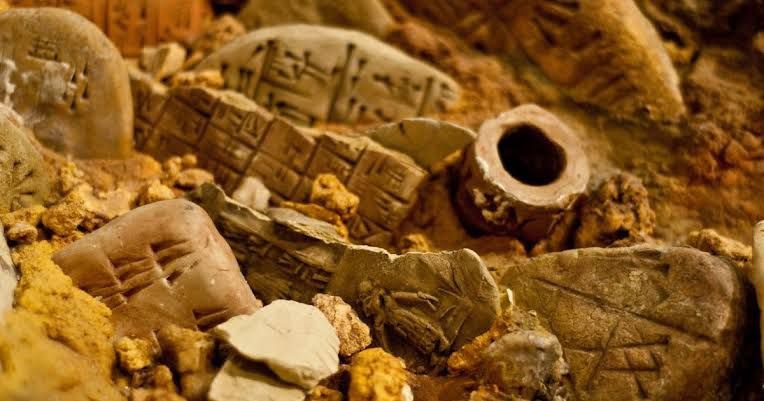
Example: Excavations at the ancient Roman city of Pompeii have provided rich information about Roman urban life, social structures, and everyday practices.
Example: Excavations at the ancient Roman city of Pompeii have provided rich information about Roman urban life, social structures, and everyday practices.
e) Environmental Archaeology
Environmental archaeology focuses on how past societies interacted with their environment, including agriculture, climate change, and resource use.
Example: Studies of ancient agriculture in the Fertile Crescent help us understand the transition from hunting and gathering to farming, which was a key development in human history.
f) Experimental Archaeology
Experimental archaeology involves recreating ancient techniques and technologies to better understand how artifacts and structures were made.
Example: Archaeologists have successfully reconstructed ancient tools, pottery, and even entire buildings to explore how these items were used and produced in the past.
g) Industrial Archaeology
This field studies the material remains of industrial societies, such as factories, mills, and transportation infrastructure, to understand the development of industry and technology.
Example: The study of early factories in the industrial revolution, such as those in Manchester, UK, offers insights into the evolution of manufacturing processes and labor systems.
h) Bioarchaeology
Bioarchaeologists study human remains to gain insight into health, diet, and behavior of past populations.
Example: Analysis of human skeletal remains from the Neolithic period can reveal information about ancient diseases, dietary habits, and social structures.
---
4. Methods in Archaeology
Archaeologists use various methods to uncover and study the past. These include:
Excavation: The process of digging through layers of soil to uncover artifacts and features. Excavations are often focused on specific areas of a site to uncover as much detail as possible.
Dating Techniques: Methods like carbon dating and dendrochronology are used to determine the age of artifacts, organic material, and structures.
Geophysical Surveying: Techniques such as Ground Penetrating Radar (GPR) and magnetometry help archaeologists identify buried features without excavation.
Site Surveying: Field surveys are conducted to identify and document archaeological sites.
Analysis of Artifacts: Detailed study of recovered objects helps archaeologists understand the function, production, and social context of material culture.
---
5. The Importance of Archaeology
Archaeology plays a crucial role in understanding humanity’s past. Some of the key benefits include:
Preserving Cultural Heritage: By uncovering and preserving ancient sites and artifacts, archaeology helps protect the world’s cultural heritage.
Understanding Human History: Archaeology helps explain the development of human societies, their technologies, and cultural practices.
Educational Value: It offers valuable lessons about human development, society, and civilization, contributing to a greater appreciation of different cultures and histories.
---
Conclusion
Archaeology is a diverse and dynamic field that helps us better understand the complexities of human history. Through excavation, analysis, and new technological tools, archaeologists continue to uncover the mysteries of past civilizations, offering insights into the lives, cultures, and innovations of people long gone. By studying the physical remnants of the past, archaeology not only illuminates human history but also provides lessons that can inform our present and future.
---
References:
1. Fagan, B. M. (2015). Archaeology: A Brief Introduction (11th ed.). Pearson.
2. Renfrew, C., & Bahn, P. (2016). Archaeology: Theories, Methods, and Practice (7th ed.). Thames & Hudson.
3. Ucko, P. J., & Layton, R. (1999). The Archaeology of Social Boundaries. Smithsonian Institution Press.
4. Hodder, I. (2012). Entangled: An Archaeology of the Relationships Between Humans and Things. Wiley-Blackwell.
Compiled by Professor Dr. Hesam Mohtasham
0 Comments:
replay to Comments
Write your answer, it will be displayed after the administrator's approval
Leave a Reply